
A folder of saved travel posts can be an optimistic place. There are weekends in there that would require considerably more vacation time than most of us have. Still, a save tells us something lovely: someone could imagine wanting that experience.
I am interested in what we give that person when they return to it. They might remember a beautifully lit restaurant or a walk beside the water. Now they are trying to work out where to stay, how the pieces fit together, and whether this could become an actual weekend.
That is a useful way to review a destination’s creative work. Follow one idea from the social post into the profile, through the link, and onto the page where the details live.
The person should be able to recognize the experience that first caught their attention and find the information they need to keep exploring.
A restaurant story might lead to a neighborhood guide with nearby places to stay. A festival post might connect to dates, access information, and a plan for the following morning. The language, images, and practical details can help the visit feel coherent as the person moves through it.
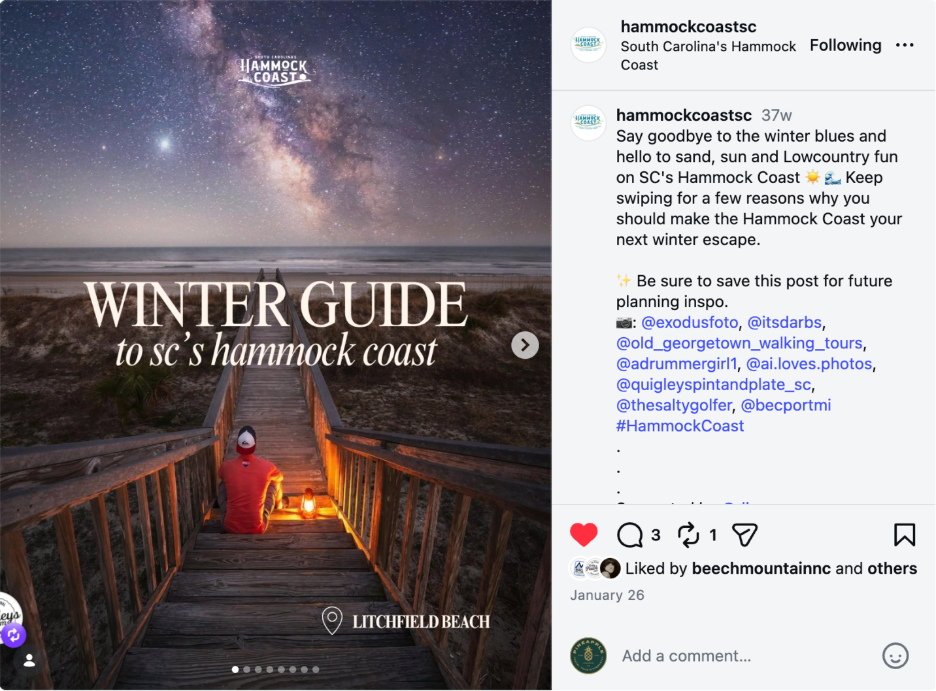
I put this into practice with a Winter Guide for South Carolina’s Hammock Coast. The goal was to bring visitors in during shoulder season, so the guide made the case for traveling off peak and then got practical. Each slide covered one category, such as lodging, dining, or activities, and showed what a visitor could expect as they started planning. The caption sent people to the link in bio to learn more and plan the trip.
Testing that route on a phone belongs in the creative review. It is a simple way to spot a confusing link, an unexpected change of tone, or a missing detail. Try it with a trip you are considering yourself: what would you need to know before you felt comfortable putting it on the calendar?